Search This Blog

Friday, 27 January 2012

Sungai Klah Hot Springs Park


Sungai Klah Hot Springs Park
If you are looking for a unique holiday with your family, try this park and you will be fascinated with the facilities provided here. This place was built at a cost of RM6 million and was opened in December 2003. It is reputed to be one of the best managed hot spring in Malaysia and is located 200 feet above the sea level at the foothill of the Titiwangsa Range, the backbone range of Peninsular Malaysia. Once you arrive here, you will be amazed by the lush greeneries, hills, streams and rivers that abounds in the vicinity.
The hot spring is one of the other alternative to modern day spa centres. Spas have become one of the attractions in many hotels and resorts in this region. Many believed that the natural springs have healing properties that will help toheal and detoxify toxic from your body. Those with stiff muscles, stiff joints, rheumatism, spinal injuries, insomnia andskin related problems should consider soaking themselves here.
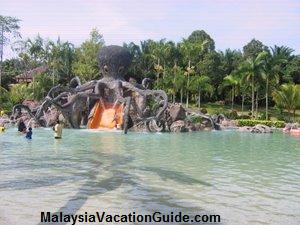
The big hot spring pool that gets its source of heat from the underground


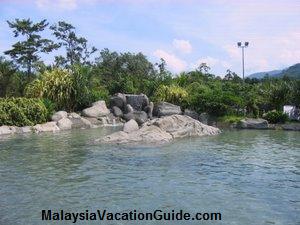
The big pool that gets its source of cool water from the mountain spring


Private Jacuzzi
If you and your family prefer to have the privacy of soaking in a private atmosphere instead of joining the crowd at thebig pool, try the normal or the superior private jacuzzi. You will need to pay RM75/hour for a standard type and RM125/hourfor the superior type. Remember to book early to avoid disappointment, especially during the weekends.
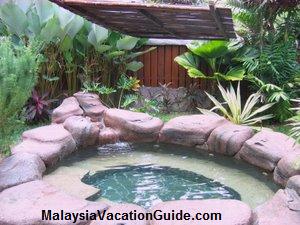
One of the nicely built private pool at the hot springs


Egg Boiling Activity
Families will enjoy the egg-boiling activity at this place. The water temperature at this area can go up to 100 °C andbaskets are provided for those who want to enjoy this activity. The reading of the water temperature can be seen by thethermometer that are placed here. As the water temperature can scald your skin, remember to take care of your children andwarn them about the danger of the hot water.
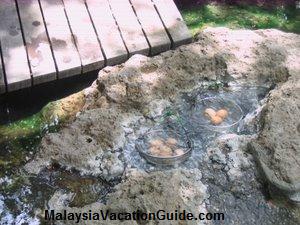
Another attraction is the egg boiling activity here. Children will enjoy it.


Water Reflexology
Walk barefoot along the hot stream of water that is covered with stones. This is part of the water reflexology that was built to enable visitor to enjoy this facility. Some said that if you are able to walk without feeling much pain on the sole of your feet, it means that you are healthy.
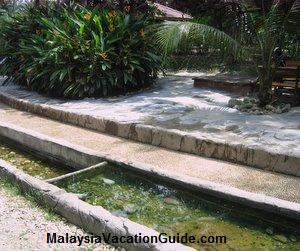
The water reflexology where stones and hot water are combined to have maximum effort of the theraphy


Board Walk
The natural hot springs board walk will lead you to the heat source of the water that comes bubbling out from the ground.Here, at the platform that is built over the springs, you will be able to experience the radiated heat from the water. Thetemperature range from 60 °C to 101 °C. Clouds of steam that surround the greeneries is a good sight to see especiallyduring the night when the spot lights are activated.


Other Facilities
In making this place an even more attractive tourist spot, there is a big cafeteria that offers a variety of food and drinks.Get some souvenir from the souvenir shop nearby. If you are into burgers, try the local burgers that are sold at the stallsnearby. Toilets and shower facilities are also provided here. If you need further massage, try the traditional massagethat are available during the weekends.
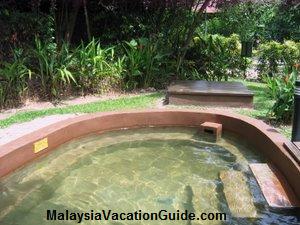
Dip your tired feet into this hot pool with temperature that range from 35 °C
to 38 °C


Accommodation
If you would like to stay here for a night or two, there are 5 villas that are available for you to book. Villa A type consists of 2 rooms and costs RM600/night during weekdays and RM800/night during weekend, school holidays and public holidays. Villa B type consists of 1 room and costs RM450/night during weekdays and RM600/night during weekend, school holidays and public holidays.
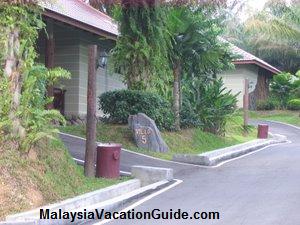
The villas that you can opt to stay


Getting Here and Entrance Fees
Sungai Klah is located 10km away from the town of Sungkai in Perak. Whether you are coming from the North or the South of Peninsular Malaysia, get to the nearest PLUS Highway and head for Sungkai toll exit. The journey from Kuala Lumpur to Sungkai is approximately 70 minutes. After the exit, turn left at the junction. Travel 1km along the trunk road and turn left. Follow the signage to Sg. Klah Hot Springs Park and you will pass Sungai Klah FELDA village before reaching here.
Operating hours: 8am - 10pm daily
Entrance Fee: RM10/adult and RM8/child
Address:
Sungai Klah Hot Springs Park
36000 Sungkai
Perak
For reservation of private pool or more information, call
Tel: +6 05 438 8801 or +6 03 2697 9772


Video
See the video of the hot springs before you decide whether it is worthwhile to go. We would strongly recommend it for your entire family to spend half a day there.


TALANG-SATANG NATIONAL PARK


INTRODUCTION

Sarawak’s first marine national park, Talang-Satang was established with the primary aim of conserving Sarawak’s marine turtle population. The park comprises the coastline and sea surrounding four islands of the southwest coast of Sarawak; Pulau Talang Besar (Greater Talang Island) and Pulau Talang Kecil (Lesser Talang Island) off Sematan, and Pulau Satang Besar (Greater Satang Island) and Pulau Satang Kecil (Lesser Satang Island) off Santubong, near Kuching. These four “Turtle Islands” are responsible for 95% of all the turtle landings in Sarawak. The park also includes the Pulau Tukong Ara-Banun Wildlife Sanctuary, two tiny islets which are important nesting sites for colonies of Bridled Terns and Black-Naped Terns.
Talang-Satang National Park covers a total area of approximately 19,400 hectares (19.4 sq km), and comprises all lands below the high tide marks on the respective islands, and the surrounding seas for a radius of 4.8 km from the highest point on each island. Beautiful shallow reef areas surround all the four islands. The reefs generally consist of several species of hard coral and colonies of soft coral. They provide shelter and resting grounds for sea turtles, and are also important fish breeding areas.


MARINE TURTLE CONSERVATION

Marine turtles are amongst the world’s longest-lived creatures, with many reaching a lifespan of more than 100 years. Graceful swimmers that spend most of their time underwater, they have survived almost unchanged since the Triassic period, some 200 million years ago. However the breeding habits that have served them so well for so long are now contributing to their extinction.
Marine turtles mature slowly, only starting to breed between 30 and 50 years of age, and once they commence breeding, females usually only produce eggs once every four or five years. They do not lay their eggs on just any beach, but migrate back to their beach of birth, sometimes across distances of more than 3,000 km. How they find their way back to that particular beach is one of nature’s great unsolved mysteries. It is also a major factor in the decline of turtle populations, because as beaches around the world are developed for various purposes, the turtles are unable to move to undisturbed nesting sites.
Other factors that contribute to turtle mortality are deliberate poaching of turtles for meat and tortoiseshell; uncontrolled collecting of turtle eggs; entrapment in fishing nets; destruction of feeding grounds such coral reefs or sea grass beds; and ingestion of plastic bags which some species mistake for jellyfish, part of their natural diet. Even under perfect conditions, survival rates are very low. A female turtle may lay as many as 10,000 eggs in her lifetime, but because of nesting losses due to natural land predators and predation by fish once they reach the sea, as few as 10 hatchlings will survive to reach maturity.
Five marine turtle species are known to nest in Sarawak, with the peak turtle nesting season running from April until September. By far the most important is the Green Turtle (Chelonia mydas), which represents 90% of all turtle landings, mainly on the islands of Talang-Satang national park. The other species that occasionally lands on the islands is the Hawksbill Turtle (Eretmochelys imbricata), whilst the Olive Ridley, Leatherback and Loggerhead Turtles nest primarily on the mainland. All of these species are critically endangered worldwide.
Because of the threat to marine turtles, a conservation programme is under way on Talang-Satang’s three larger islands, and also in Tanjung Datu and Similajau National Parks on the Sarawak mainland. Eggs are either removed from nests and placed in guarded hatcheries, or left in place and guarded round the clock by Sarawak Forestry wardens. After 40 to 60 days incubation, young hatchlings are released at night to reduce losses from predators. In addition, some hatchlings are tagged with miniaturized radio tracking devices to learn more about their ecology and life cycle. The programme appears to be working well, as the number of landings has stabilized at between 1,500 to 3,000 per year over a 10 year period, after sinking to an all time low of under 1,000 in the early 1980s.
Another reason for increased turtle landings is the successful reef-ball programme. Over 2000 concrete reef-balls have been placed in the waters of the National Park. These artificial reef balls not only provide a ready made habitat for coral species; they also provide inter-nesting shelters for turtles; The reef balls’ rough and heavy concrete construction will rip fishing nets to shreds, and therefore prevents encroachment by trawlers. It is difficult to determine exactly what difference they make to actual numbers of landings, but since the introduction of reef-balls the number of dead turtles found in Talang-Satang has decreased dramatically.
The conservation programme has been carefully planned to involve local communities. The traditional rights and practices of the local landowners, villagers, and fishermen are recognized, and Sarawak Forestry works in close co-operation with them to ensure sustainable usage of the resources they are entitled to. 


VISITING THE ISLANDS

Because of the extreme sensitivity of the habitats, visitors are only allowed within 2.8km of Pulau Talang Besar, Pulau Talang Kecil, Pulau Satang Kecil or the Ara-Banun Wildlife Sanctuary by special arrangement with Sarawak Forestry. Such permission is normally only granted to bona fide researchers, students, conservation organizations, and people participating in the Sea Turtle Volunteer Programme (see below).
Pulau Satang Besar, the largest of the islands, is open to visitors, but conservation takes priority over tourism. Parts of both the island and the surrounding sea are off-limits to visitors, who must remain within the designated area and be accompanied by Sarawak Forestry wardens at all times. Despite these very necessary restrictions, Pulau Satang Besar is a fascinating and beautiful place to visit. The turtle hatchery is the main land-based attraction, where visitors can learn all about the conservation programme.
The island itself is steep and thickly forested, and unsuitable for trekking. However a white sand beach stretches across the entire southern side of the island. The surrounding waters are a deep emerald green with coral reefs just a short distance from the shore, which offer good snorkelling possibilities. The sea-bed slopes gradually to a depth of about 12 metres, with some attractive hard coral formations, soft corals, gorgonian sea fans and feather stars, surrounded by their attendant small fish. The colours can be fantastic, but visibility is frequently limited to between 3 and 10 metres, so only serious snorkellers and divers will see the corals at their best. Large pelagic fish are rare, but Green Turtles can occasionally be seen gliding gracefully through the water.

Diving and Snorkelling
Scuba diving and snorkelling are confined within the designated zone only. No water recreation activities are allowed outside the zone in the interests of conservation. Scuba divers must be accompanied by an approved dive guide. Diving tanks, BCDs and regulators can be rented from the Sarawak Forestry operations office on the island, but must be booked in advance. Please contact the National Parks Booking Office in Kuching for further details.
The Sea Turtle Volunteer Programme
The Sarawak Sea Turtle Volunteer Programme (SSTVP) is a unique eco-tourism initiative run by Sarawak Forestry. Open from May to September, this conservation-driven programme allows volunteers to actively participate in Sarawak’s turtle conservation efforts by spending 4 days at the Turtle Conservation Station on Pulau Talang-Talang Besar.
Upon arrival on the island, volunteers are briefed on the conservation programme before being allocated tasks or areas of responsibility. Duties include beach patrols to locate turtle arrivals, monitoring turtle nesting activity, tagging and measuring turtles, transferring eggs to the hatchery, releasing hatchlings, data recording and other on-site conservation activities.
The SSTVP offers participants the chance to learn more about turtle conservation and experience unforgettable encounters with marine turtles. Furthermore, participants gain the satisfaction of knowing that they are actually contributing to a valuable conservation project.
Please note that the Sarawak Sea Turtle Volunteer Programme is not suitable for everyone. Accommodation facilities are basic and everyone is expected to help with cooking and cleaning-up. Volunteers join a team of dedicated conservation experts whose mission is to monitor every turtle landing on the island and thus help to preserve Sarawak’s natural heritage. Volunteers can expect a rewarding ‘Back to Nature’ experience but should bear in mind that the programme is not a beach holiday.
For further details please contact Sarawak Forestry
VISITOR SAFETY

Talang-Satang’s coral reefs are home to a number of venomous creatures, including Sea Snakes, Coral Snakes, Stonefish and Cone Shells. Marine Snakes are usually harmless if undisturbed, and if seen should be left well alone. Stonefish may conceal themselves in mud or sand surrounding the coral, especially at low tide, so do not walk or swim barefoot around coral reefs. Cone Shells are highly venomous and should not be handled under any circumstances.


TRAVEL NOTES

Entry Fees & Permits
There is a nominal entry fee for all National Parks in Sarawak. A permit is required for professional filming, which should be arranged in advance with the National Parks Booking Office. Check with the National Parks Booking Office in Kuching or the Sarawak Forestry website for the latest fee structure. Visitors to Talang-Satang must obtain a permit and pay any fees at the National Parks Booking Office in Kuching.

Reservations & Enquiries
National Parks Booking Office,
Visitors Information Centre,
Jalan Tun Abang Haji Openg,
93000 Kuching Sarawak,
Tel:             (+6) 082 248088       Fax: (+6) 082 248087 begin_of_the_skype_highlighting            (+6) 082 248087      end_of_the_skype_highlighting
Online booking: http://ebooking.com.my
The Visitors Information Centre is located in the Old Courthouse Complex at the junction of Jalan Tun Abang Haji Openg, Jalan Gambier and Main Bazaar, opposite the Kuching Waterfront.

Opening Hours
National Parks Booking OfficeMonday-Friday0800 hrs – 1700 hrs
Saturday, Sunday& Public HolidaysClosed
 
Getting There
Pulau Satang Besar is a 30-minute boat ride from Damai Beach, Sarawak Boat Club Jetty or Telaga Air Jetty. There is no regular boat service and visitors should travel in an organised tour. A number of Kuching-based tour operators run day trips to the island, often in conjunction with other marine-based activities such as dolphin watching or mangrove cruises. All other areas of Talang-Satang National Park are off limits to visitors except by special arrangement, in which case transport will be organised by Sarawak Forestry.

Accommodation
There is a small, locally operated visitor lodge on Pulau Satang Besar, with limited amenities and accommodation. There is no visitor accommodation elsewhere in Talang-Satang National Park, and overnight stays are not permitted due to the need for conservation of turtle nesting areas. There are no canteens or other visitor facilities, so visitors should bring food and drink with them.
Further Information
SARAWAK FORESTRY
Tel:             (+6) 082 610088       Fax: (+6) 082 610099 begin_of_the_skype_highlighting            (+6) 082 610099      end_of_the_skype_highlighting
Toll free line: 1 800 88 2526
Website: www.sarawakforestry.com 
Email: info@sarawakforestry.com


Sarawak Cultural Village


[MORE PHOTOS]
GETTING HERE:
The Sarawak Cultural Village is sandwiched between Holiday Inn Damai Lagoon and Holiday Inn Damai Beach Resort. Walking from these two resorts is possible. From Kuching, the journey takes about 45 minutes through the spectacular peninsula of Santubong at which Damai seaside resorts are located. Taxi hire from downtown Kuchingis possible but it can cost you a lot. Then there is a question of getting a taxi back to Kuching after you have finished visiting all the attractions the village. There will be an exorbitant surcharge should you require the taxi driver to wait for your return trip.

For me, the best way to get to the village is by either the Kuching - Sarawak Cultural Village or Kuching - Damai shuttle services. Roundtrip fares are RM20 per adult and RM10 per children below the age of 12. The shuttle schedules are outlined below. Note that these schedules are obtained in September 2006, hence the departure times may vary in the future.
: KUCHING - SARAWAK CULTURAL VILLAGE - KUCHING :
Departure from Holiday Inn KuchingDeparture from Sarawak Cultural Village
0900 hrs1315 hrs
1015 hrs1515 hrs
1215 hrs1715 hrs
1415 hrs-
: KUCHING - DAMAI RESORTS - KUCHING :
From Holiday Inn KuchingFrom Crowne Plaza RiversideFrom Holiday Inn Damai BeachFrom Holiday Inn Damai Lagoon
0730 hrs0735 hrs0910 hrs0915 hrs
1015 hrs1020 hrs1115 hrs1120 hrs
1215 hrs1220 hrs1315 hrs1320 hrs
1415 hrs1420 hrs1515 hrs1520 hrs
1615 hrs1620 hrs1715 hrs1720 hrs
1815 hrs1820 hrs1900 hrs1905 hrs
2015 hrs2020 hrs2100 hrs2105 hrs
2200 hrs2205 hrs--
Note that for the Kuching - Damai Resorts - Kuching shuttle service, the mini van will pass by the entrance of the Cultural Village, hence you will be able to request a stop here.

ENTRANCE FEES:
The tickets can be purchased at the entrance for RM45 for adult and RM22.50 for children (between 6-12 of age). If you are taking the scheduled shuttle service from Kuching as mentioned above, the fee will be RM60 per adult which includes the entrance fee and the shuttle fare.

The village opening hour is 0900hrs - 1715 hrs daily.

FEATURES:
The Sarawak Cultural Village was officially opened in 1990. It was set in a tranquil settingof landscaped tropical forests and a man-made lake. This cultural village is considered a must-visit for every visitor to Kuching because it showcases the various attributes of major ethnic population in the whole state of Sarawak, namely the MalayChineseIban,Orang UluBidayuhMelanau and Penan. While there is nothing comparable to visiting the actual dwelling sites of these tribes who thrive in either the massive delta of Rajang River, or in deep rainforests accessible only by airplanes, the showcases in this village are pretty much as close as one can get in getting to know the colourful multi-ethnic characteristics of Sarawak.

While the many tribal houses are pretty much the star attractions of this cultural village (more on that below), there are other various features that worth a mention. Throughout the cultural village, there are stone sculptures carved by various artists from around the world. There is also a beautifully made multi-purpose hall called Dewan Lagenda where occasional traditional games are held for the visitors.

Another important feature of the cultural village is a mini-theatre where award-winningcultural performances are held daily. To be honest, the cultural performance is not something one should miss. There are two cultural performances held daily, at 1100 hrs and 1400 hrs. Each performance will last for about an hour. Visitors should plan their visits to the cultural village such that they would be able to enjoy the spectacular showcase of various cultural dance rituals of the many ethnic tribes in Sarawak.

Other than that, there is an eatery here called Restaurant Budaya to satisfy your gastronomic needs after spending a few hours in the cultural village. There is also a neatgift shop near the entrance where you can purchase various types of souvenir to bring home.

Now, back to the showcase houses. There are seven of them altogether. I wrote about them in separate articles below:
MY VERDICT:
Simply a must-visit when in Kuching.


Tuesday, 17 January 2012

Wonders of the World


Various lists of the Wonders of the World have been compiled from antiquity to the present day, to catalogue the world's most spectacular natural wonders and manmade structures.
The Seven Wonders of the Ancient World is the first known list of the most remarkable creations of classical antiquity, and was based on guide-books popular among Hellenic sight-seers and only includes works located around the Mediterranean rim. The number seven was chosen because the Greeks believed it to be the representation of perfection and plenty.[1] Many similar lists have been made.

Contents

  [hide

Seven Wonders of the Ancient World

The Great Pyramid of Giza, the only wonder of the ancient world still in existence
The Colosseum in Rome
The Aurora Borealis or Northern Lights
The London sewerage system's original Abbey Mills pumping station
The historian Herodotus (484 – ca. 425 BCE), and the scholar Callimachus of Cyrene (ca. 305 – 240 BCE) at the Museum of Alexandria, made early lists of seven wonders but their writings have not survived, except as references. The seven wonders included:
The earliest lists had the Ishtar Gate as the seventh wonder of the world instead of the Lighthouse of Alexandria.
The list known today was compiled in the Middle Ages—by which time many of the sites were no longer in existence. Today, the only ancient world wonder that still exists is the Great Pyramid of Giza.

Medieval World

In the 19th and early 20th centuries, some writers wrote about lists with names such as Wonders of the Middle Ages, Seven Wonders of the Middle Ages, Seven Wonders of the Medieval Mind, and Architectural Wonders of the Middle Ages. However it is unlikely that these lists originated in the Middle Ages because the word medieval was not invented until the Enlightenment-era, and the concept of a Middle Age did not become popular until the 16th century. Brewer's Dictionary of Phrase and Fable refers to them as "later list[s]"[2] suggesting the lists were created after the Middle Ages.
Many of the structures on these lists were built much earlier than the Medieval Ages, but were well known.[3]
Typically representative are:[2][3][4][5]
Other sites sometimes included on such lists:

Recent lists

Following in the tradition of the classical list, modern people and organisations have made their own lists of wonderful things ancient and modern. Some of the most notable lists are presented below.

American Society of Civil Engineers

The American Society of Civil Engineers compiled a list of wonders of the modern world:[10]
WonderDate startedDate finishedLocation
Channel TunnelDecember 1, 1987May 6, 1994Strait of Dover, between the United Kingdom and France
CN TowerFebruary 6, 1973June 26, 1976, tallest freestanding structure in the world 1976–2007.TorontoOntarioCanada
Empire State BuildingJanuary 22, 1930May 1, 1931, Tallest structure in the world 1931–1967. First building with 100+ stories.New YorkNYU.S.
Golden Gate BridgeJanuary 5, 1933May 27, 1937Golden Gate Strait, north of San FranciscoCaliforniaU.S.
Itaipu DamJanuary 1970May 5, 1984Paraná River, between Brazil andParaguay
Delta Works/Zuiderzee Works1920May 10, 1997Netherlands
Panama CanalJanuary 1, 1880January 7, 1914Isthmus of Panama

New7Wonders Foundation

In 2001 an initiative was started by the Swiss corporation New7Wonders Foundation to choose the New7Wonders of the World from a selection of 200 existing monuments.[11] Twenty-one finalists were announced January 1, 2006.[12] Egyptians were not happy that the only surviving original wonder, theGreat Pyramid of Giza, would have to compete with the likes of the Statue of Liberty, the Sydney Opera House, and other landmarks, calling the project absurd. In response, Giza was named an honorary Candidate.[13] The results were announced on July 7, 2007, in LisbonPortugal :[14]
WonderDate of constructionLocation
Great Wall of China5th century BCE – 16th century CEChina
Petrac.100 BCEJordan
Christ the RedeemerOpened 12 October 1931Brazil
Machu Picchuc.1450 CEPeru
Chichen Itzac.600 CEMexico
ColosseumCompleted 80 CEItaly
Taj MahalCompleted c.1648 CEIndia
Great Pyramid of Giza (Honorary Candidate)Completed c.2560 BCEEgypt

USA Today's New Seven Wonders

In November 2006 the American national newspaper USA Today in conjunction with the American television show Good Morning Americarevealed a list of New Seven Wonders as chosen by six judges.[15] The wonders were announced one per day over a week on Good Morning America. An eighth wonder was chosen on November 24, 2006 from viewer feedback.[16]
NumberWonderLocation
1Potala PalaceLhasaTibetChina
2Old City of JerusalemJerusalem[n 1]
3Polar ice capsPolar regions
4Papahānaumokuākea Marine National MonumentHawaiiUnited States
5InternetEarth
6Mayan ruinsYucatán PeninsulaMéxico
7Great Migration of Serengeti and Masai MaraTanzania and Kenya
8Grand Canyon (viewer-chosen eighth wonder)ArizonaUnited States

Seven Natural Wonders of the World

Similar to the other lists of wonders, there is no consensus on a list of seven natural wonders of the world, and there has been debate over how large the list should be. One of the many existing lists was compiled by CNN:[17]
New7Wonders of Nature (2007-11), a contemporary effort to create a list of seven natural wonders chosen through a global poll, was organized by the same group as the New7Wonders of the World campaign.
The Seven Natural Wonders[18] is a not-for-profit endeavor created to protect the seven natural wonders that have already been established.

Seven Wonders of the Underwater World

The Seven Underwater Wonders of the World was a list drawn up by CEDAM International, an American-based non-profit group for divers, dedicated to ocean preservation and research.
In 1989 CEDAM brought together a panel of marine scientists, including Dr. Eugenie Clark, to pick underwater areas which they considered to be worthy of protection. The results were announced at The National Aquarium in Washington DC by actor Lloyd Bridges, star of TV's Sea Hunt:[19]

Seven Wonders of the Industrial World

British author Deborah Cadbury wrote Seven Wonders of the Industrial World, a book telling the stories of seven great feats of engineering of the 19th and early 20th centuries. In 2003 the BBC made a seven-part documentary series on the book, with each episode dramatising the construction of one of the wonders. The seven industrial wonders are:

Other lists of wonders of the world

Numerous other authors and organisations have composed lists of the wonders of the world. Travel writer Howard Hillman published two books on the subject, one with 10 man-made wonders, and one with 10 natural wonders.[20][21] British biographer, science writer, and novelist Ronald W. Clark published a book of man-made and natural wonders titled Wonders of the World, which lists 52 wonders, one for each week of the year.[22]

See also

Footnotes

  1. ^ Both the USA Today article and the Good Morning America broadcast described this wonder as "Jerusalem's Old City, Israel." However states and scholars alike are divided over the legal status of Jerusalem under international law. See Positions on Jerusalem.

References

  1. ^ Anon. (1993)The Oxford Illustrated Encyclopedia First Edition Oxford:Oxford University
  2. a b I H Evans (reviser), Brewer's Dictionary of Phrase and Fable(Centenary edition Fourth impression (corrected); London: Cassell, 1975), page 1163
  3. a b Hereward Carrington (1880–1958), "The Seven Wonders of the World: ancient, medieval and modern", reprinted in the Carington Collection (2003) ISBN 0-7661-4378-3page 14.
  4. ^ Edward Latham. A Dictionary of Names, Nicknames and Surnames, of Persons, Places and Things (1904), page 280.
  5. ^ Francis Trevelyan MillerWoodrow WilsonWilliam Howard Taft,Theodore RooseveltAmerica, the Land We Love (1915), page 201.
  6. ^ Palpa, as You Like itpage 67)
  7. ^ The Complete Idiot's Guide to the Crusades (2001, page 153))
  8. ^ The Rough Guide To England (1994, page 596))
  9. ^ The Catholic Encyclopedia, v.16 (1913), page 74
  10. ^ "American Society of Civil Engineers Seven Wonders". Asce.org. 2010-07-19. Retrieved 2010-08-30.
  11. ^ New Seven Wonders[dead link]
  12. ^ Finalist Page[dead link]
  13. ^ "Egypt Angered at New Wonders Idea". Home.bellsouth.net. 1985-01-01. Retrieved 2010-07-31.
  14. ^ "Reuters via ABC News Australia "Opera House snubbed as new Wonders unveiled" 7 July 2007". Abc.net.au. 2007-07-08. Retrieved 2010-07-31.
  15. ^ "New Seven Wonders panel". Usatoday.com. 2006-10-27. Retrieved 2010-07-31.
  16. ^ Clark, Jayne (2006-12-22). "The world's 8th wonder: Readers pick the Grand Canyon". Usatoday.com. Retrieved 2010-07-31.
  17. ^ "CNN Natural Wonders". Cnn.com. 1997-11-11. Retrieved 2010-07-31.
  18. ^ "Seven Natural Wonders". Sevennatualwonders.org. Retrieved 2010-07-31.
  19. ^ "Underwater Wonders of the World". Wonderclub. Retrieved 2010-08-31.
  20. ^ Hillman, Howard"World's top 10 man-made travel wonders". Hillman Quality Publications. Retrieved 2007-07-07.
  21. ^ Hillman, Howard"World's top 10 natural travel wonders". Hillman Quality Publications. Retrieved 2007-07-07.
  22. ^ Clark, Ronald W. (1980). Wonders of the World. Artus Publishing Company Ltd. ISBN 978-0668049320.